
Here’s How GLP-1/Ozempic Impacts the Voice; A Guide for Singers
If you've recently started Ozempic, Wegovy, Zepbound, or another GLP-1 medication and your voice feels different, you're not necessarily imagining it. Maybe your voice feels less responsive. Maybe your stamina has changed. Perhaps your breath management feels different than it did six months ago. Or maybe you're noticing fluctuations in flexibility, recovery, or vocal consistency that seem difficult to explain.
At the moment, there are no published studies directly examining the effects of GLP-1 medications on the singing voice. No one has yet measured changes in range, resonance, vocal stamina, or vocal performance in singers taking these medications. But that doesn't mean there is nothing to discuss.
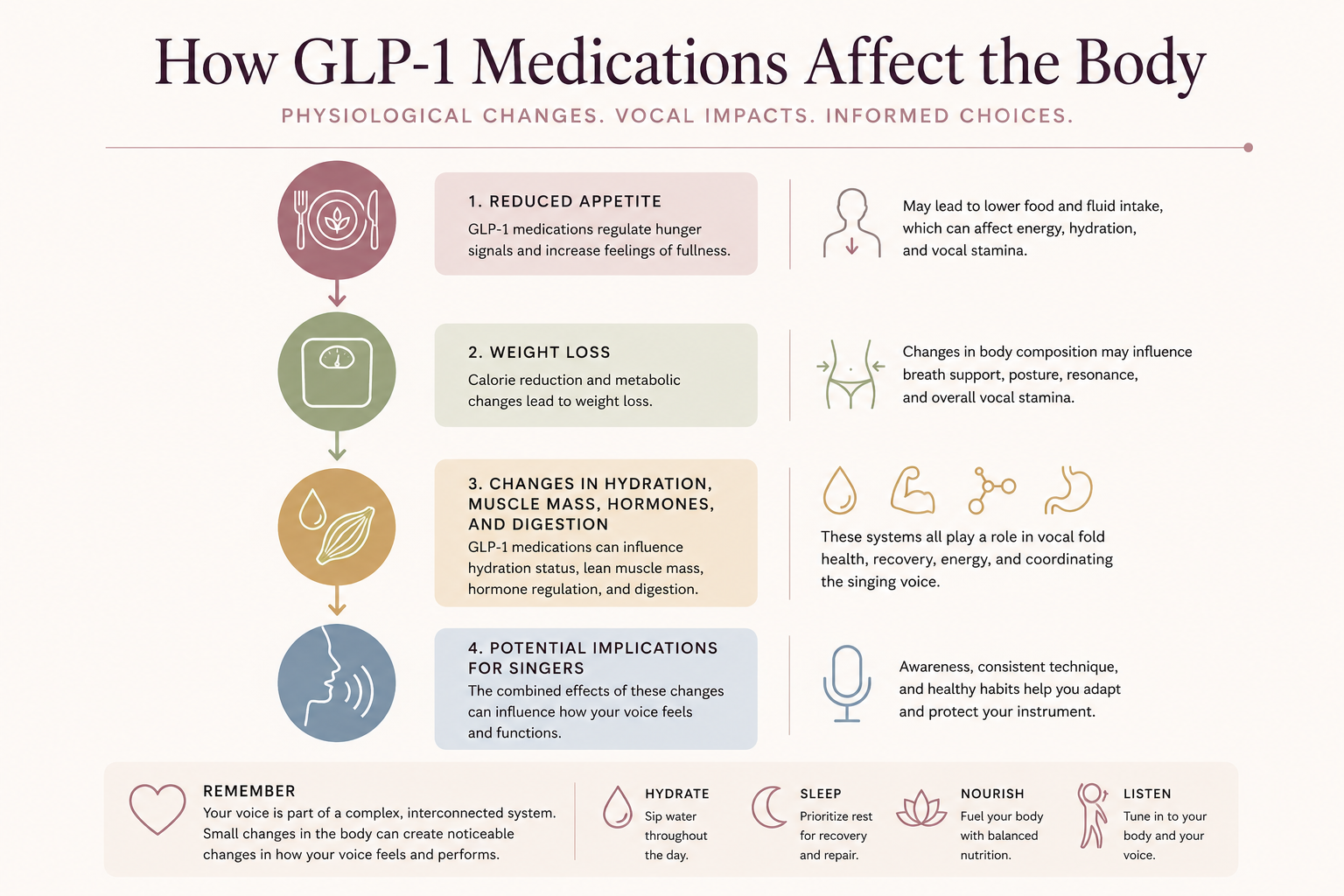
The singing voice does not exist in isolation from the rest of the body. GLP-1 medications can influence hydration, nutrition, muscle mass, gastric emptying, body composition, and hormone regulation. All of these systems play important roles in vocal function.
As singers, we may not yet have direct voice research, but we can examine what these medications do to the body and consider how those changes could affect the instrument.

Singers are their own best advocate and understanding the impacts of medical interventions on the voice are critical for managing your instrument.
Why This Conversation Matters for Singers
Weight has always been a complicated topic in the performing arts.
Whether we like it or not, appearance can influence opportunities in many corners of the industry. Opera companies, musical theatre productions, commercial music projects, film, television, and social media all place varying degrees of emphasis on how performers look as well as how they sound.
Historically, singers have often found themselves navigating competing pressures. On one hand, they are artists whose livelihood depends on a highly physical instrument. On the other, they may feel explicit or implicit pressure to conform to aesthetic expectations that have little to do with vocal function.
For some singers, GLP-1 medications represent an opportunity to improve their health, manage diabetes, reduce obesity-related risk factors, or address long-standing struggles with weight management. For others, the decision may be influenced by professional considerations. The reality is that body composition, health, appearance, and performance are often intertwined in ways that can be difficult to separate.
This is one reason the conversation around GLP-1 medications has become so prominent within the entertainment industry. Numerous actors, musicians, and public figures have openly discussed using GLP-1 medications, while widespread media speculation has surrounded many others. Regardless of who is or is not taking them, it is clear that these medications are changing the conversation around weight loss and body image across the performing arts. As singers, however, we must be careful not to reduce the discussion to appearance alone.
The singing voice is a living instrument. Any intervention that changes hydration, nutrition, muscle mass, hormone regulation, recovery, or body composition has the potential to influence vocal function as well. That does not mean these medications are inherently harmful to singers. It does mean that singers deserve information that goes beyond before-and-after photos and social media headlines.
The question is not simply: "Will I lose weight?" The question is also: "How might these physiological changes influence the instrument I rely on every day?" That is the conversation I hope to begin here.
What Are GLP-1 Medications?
GLP-1 receptor agonists were originally developed to help manage type 2 diabetes. More recently, they have become widely used for weight management and obesity treatment. According to the Cleveland Clinic GLP-1 Agonists Overview, these medications help regulate blood sugar, reduce appetite, increase satiety, and slow gastric emptying.¹
Common examples include:
Ozempic (semaglutide)
Wegovy (semaglutide)
Mounjaro (tirzepatide)
Zepbound (tirzepatide)
These medications work by:
Reducing appetite
Increasing feelings of fullness
Slowing gastric emptying
Improving insulin regulation
For many individuals, the results can be significant. Clinical trials have demonstrated average weight reductions approaching 15–20% of body weight in some patient populations.² While these outcomes may provide meaningful health benefits, they also create physiological changes that singers should understand.
Hydration and the Singing Voice
Healthy vocal fold vibration depends on adequate hydration. The vocal folds are living tissue. They rely on healthy tissue hydration and surface lubrication to vibrate efficiently. Even mild dehydration can increase phonatory effort and contribute to sensations of vocal fatigue.
Many individuals taking GLP-1 medications report reduced appetite, lower fluid intake, nausea, or gastrointestinal side effects.¹ Any of these factors can make it more difficult to maintain optimal hydration. The National Institute of Diabetes and Digestive and Kidney Diseases notes that gastroparesis can contribute to malnutrition or dehydration, both of which are highly relevant for singers whose vocal function depends on healthy tissue hydration.⁴
This does not mean GLP-1 medications cause vocal problems. It does mean singers should pay close attention to hydration habits and monitor whether their voice feels different during periods of appetite suppression or gastrointestinal symptoms.
Muscle Loss, Body Composition, and Vocal Function
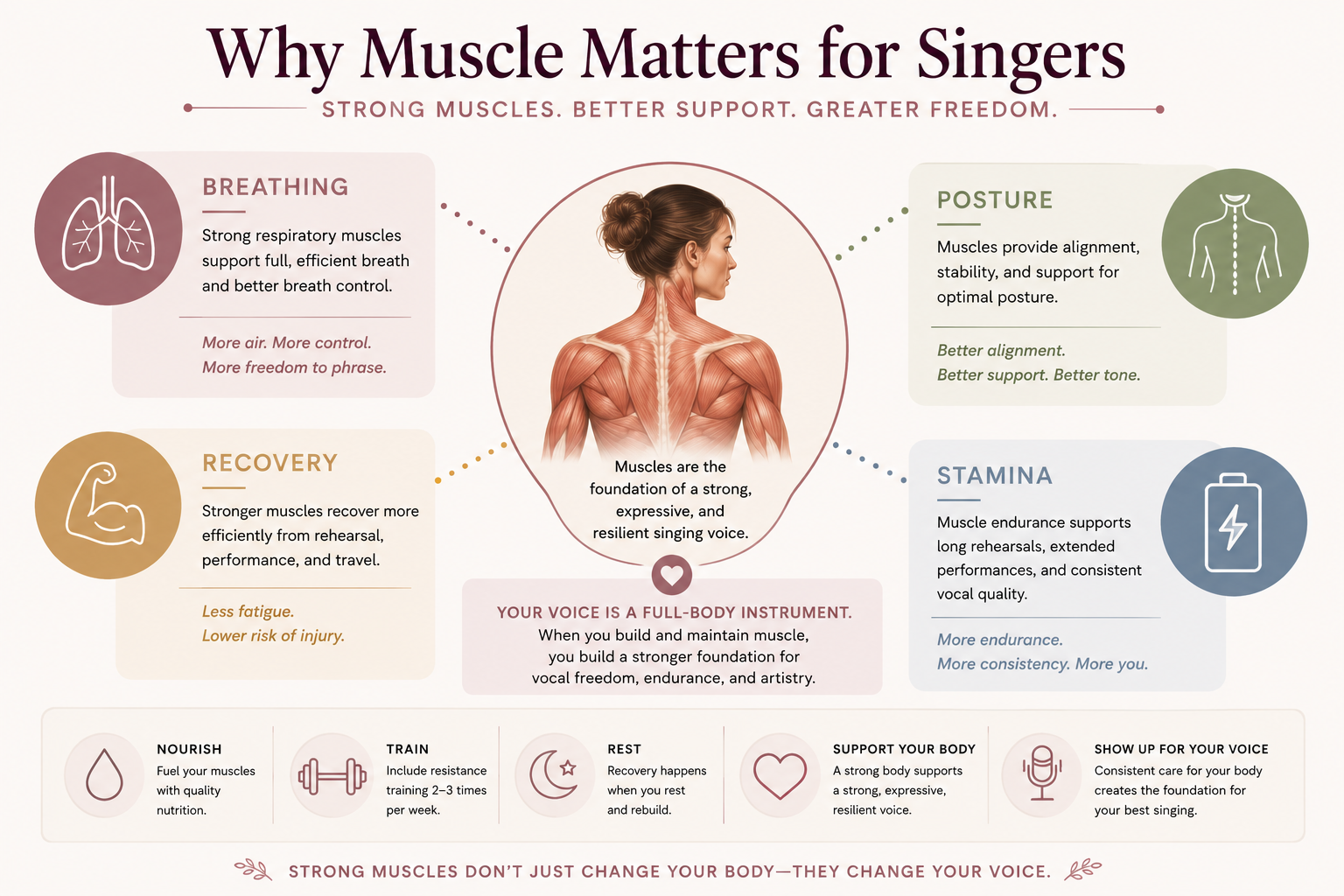
Perhaps the most important consideration for singers is the growing body of research showing that rapid weight loss often includes reductions in lean muscle mass.⁴⁻⁵ For singers, muscle matters. Breathing is a muscular activity. Posture is a muscular activity. Recovery is influenced by muscle mass and overall conditioning. The goal is not simply weight loss. The goal is maintaining a healthy, functional body capable of supporting vocal performance.
Rapid weight loss can change more than the number on the scale. Changes in muscle mass, body composition, hydration status, and energy availability may alter the way your body responds to vocal coordination. Movements that once felt automatic may suddenly feel different. Some singers report changes in stamina, breath management, or overall vocal reliability during periods of significant weight loss. This is not necessarily a sign that your technique is deteriorating. Rather, it may reflect the reality that your instrument is adapting to a changing body.
Periods of rapid physical change are often the worst times to step away from technique. If you are using a GLP-1 medication, prioritize adequate protein intake, resistance training, and regular monitoring of muscle mass. Just as importantly, continue your vocal training.
Staying connected to your instrument allows you to adapt more efficiently, maintain healthy coordinations, and identify small changes before they become larger problems. Your voice does not exist separately from your body. As your body changes, your technique may need to evolve alongside it.
Gastric Emptying, Reflux, and Singing
One of the primary mechanisms of GLP-1 medications is delayed gastric emptying.³ For singers, this raises an important question: Could slower gastric emptying influence reflux? According to the Mayo Clinic Gastroparesis Resource Center, delayed gastric emptying can contribute to symptoms including nausea, bloating, feeling full quickly, and acid reflux.³ Some individuals report worsening reflux symptoms while taking GLP-1 medications. Others experience improvement, particularly if significant weight loss reduces abdominal pressure and improves overall reflux management. Because reflux can affect vocal health, singers should pay attention to symptoms such as:
Chronic throat clearing
Persistent cough
Excess mucus
Hoarseness
Sensation of a lump in the throat (aka globus sensation)
Any significant changes should be discussed with a physician. For singers already managing GERD or LPR (Silent Reflux), this may be an area worth monitoring closely.
Rapid Weight Loss and Hormonal Changes
Significant weight loss can influence hormone production and regulation throughout the body. For women in particular, rapid changes in body composition may affect reproductive hormones, especially when calorie intake becomes highly restricted.This deserves attention because hormones influence:
Tissue hydration
Recovery
Vocal fold flexibility
Energy levels
Muscular coordination
If you have not already read my article, Hormones and the Singing Voice: What Every Female Singer Should Know, I encourage you to do so. The voice does not exist in isolation from the endocrine system.
While we do not currently have studies examining how GLP-1-related weight loss affects the singing voice specifically, the relationship between body composition, hormones, and vocal function deserves further study.

Five Things Singers Can Do While Taking a GLP-1 Medication
1. Track your voice
Patterns create clarity.
Monitor range, stamina, flexibility, recovery, and fatigue.
2. Prioritize hydration
Hydration remains one of the foundations of healthy vocal function.
3. Protect muscle mass
Resistance training and adequate protein intake become especially important during periods of rapid weight loss.
4. Monitor reflux symptoms
Pay attention to digestive changes and seek medical guidance when necessary.
5. Stay engaged with your technique
Periods of rapid physical change are often when singers need their technical foundation the most.
Your body may be changing.
That is precisely why you need to stay connected to the instrument. Consider booking weekly lessons or coaching programs to monitor the changes in your body and voice.
The singer is often the only person seeing the complete picture.
Your endocrinologist sees hormones. Your gastroenterologist sees digestion. Your voice teacher sees technique.
But you are the one living inside the instrument.
The Bigger Picture
At the moment, we do not have direct evidence showing that GLP-1 medications harm the singing voice.
What we do have is a growing body of research showing that these medications can influence hydration, muscle mass, nutrition, body composition, gastric emptying, and hormone regulation.
All of those systems contribute to vocal function.
As singers, our job is not to panic.
It is to pay attention.
The voice is not separate from the body.
Any intervention that changes the body has the potential to influence the instrument as well.
The more we understand those relationships, the better equipped we are to make informed decisions and continue making music for years to come.
Final thoughts…
As a voice teacher, I am not prescribing medical treatment, nor am I suggesting that GLP-1 medications are inherently harmful or beneficial for singers. My goal is simply to help singers understand how changes in health, physiology, body composition, and overall wellness may influence vocal function so they can make informed decisions alongside qualified healthcare professionals.
The reality is that modern healthcare is often highly specialized. Your primary care physician may be focused on metabolic health. Your endocrinologist may be focused on hormone regulation. Your gastroenterologist may be focused on digestive symptoms. Your voice teacher may be focused on vocal function and artistic performance.
But as the singer, you are the one experiencing how all of these systems interact inside a single instrument.
That is why every singer needs a basic understanding of how the voice works and how broader health factors can influence the body that produces it. The more informed you are, the better equipped you will be to ask questions, recognize patterns, advocate for yourself, and make decisions that support both your health and your artistry.
In many cases, the singer is the only person seeing the complete picture.
References
Cleveland Clinic. GLP-1 Agonists. https://my.clevelandclinic.org/health/treatments/13901-glp-1-agonists
Maselli DB, Camilleri M. “Effects of GLP-1 and Its Analogs on Gastric Physiology in Diabetes Mellitus and Obesity.” Current Treatment Options in Gastroenterology. 2021. https://pubmed.ncbi.nlm.nih.gov/32077010/
Mayo Clinic. “Gastroparesis: Symptoms and Causes.” https://www.mayoclinic.org/diseases-conditions/gastroparesis/symptoms-causes/syc-20355787
National Institute of Diabetes and Digestive and Kidney Diseases. “Gastroparesis.” https://www.niddk.nih.gov/health-information/digestive-diseases/gastroparesis
Bikou A, et al. “A Systematic Review of the Effect of Semaglutide on Lean Mass.” 2024. https://pubmed.ncbi.nlm.nih.gov/38629387/
